Antimicrobial resistance (AMR) is a serious problem that threatens the health of people all over the world. Nigeria is also affected by this problem. With the support of the Global Fund Antimicrobial Resistance in Nigeria program, the country has gone a long way in upgrading the health systems to combat the spread of resistant infections. The administration’s national action plan is a well organized tool to fight AMR which is at the same time a great approach to cooperation among the sectors of health, agriculture, and environment.
Global Fund Antimicrobial Resistance in Nigeria
The Global Fund Antimicrobial Resistance in Nigeria initiative, is a major element in a move to consolidate Nigeria’s fight against drug resistant infections. It provides these support measures through the partnership with the Nigerian Center for Disease Control and Prevention (NCDC), WHO, and other partners to widen laboratory surveillance, renovate infection prevention and control (IPC) systems, and make it easy for the correct use of antibiotics in the healthcare and agricultural sectors.
In addition to the execution of Nigeria’s National Action Plan on AMR (NAP 2.0), the partnership is also a key player in ensuring that the money raised from abroad is used most effectively to save lives and fight the scary trend of antimicrobial resistance in the country.
National Action Plan: A Framework for Combating AMR
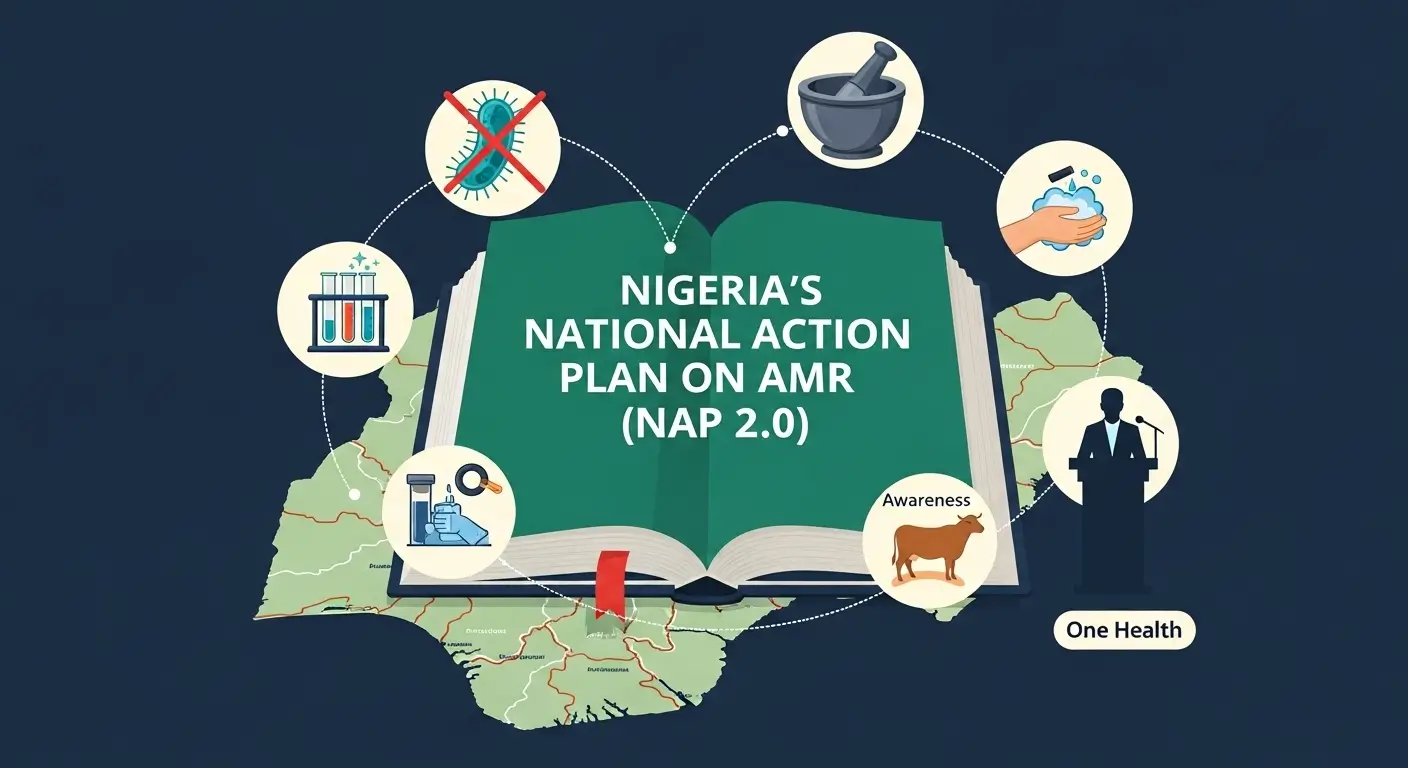
The National Action Plan (NAP 2.0) is a manifestation of Nigeria’s resolve to fight Antimicrobial resistance (AMR) using a scientifically informed, multisectoral approach. It deepens the reduction of AMR by learning from the first phase (NAP 1.0), enhancing surveillance, laboratory capacity, and stewardship programs.
Key priorities are:
- Strengthening national coordination and leadership.
- Enhancing antimicrobial use surveillance in humans and animals.
- Promoting public awareness and responsible antibiotic use.
By aligning with the Global Fund Antimicrobial Resistance in Nigeria, NAP 2.0 ensures that financial and technical resources are effectively used to reduce drug resistance through prevention, detection, and rapid response strategies.
National Action Plan on AMR: Implementation and Stakeholder Collaboration
Execution of the national action plan on AMR is dependent on a “One Health” approach that merges the health systems of humans, animals, and the environment. The NCDC through its activities acts as the main driver for the entire process of AMR surveillance, thereby giving direction to the use of data as a means of national decisionmaking.
Through partnerships with the Global Fund, WHO, and the Food and Agriculture Organization (FAO), Nigeria has:
- Expanded antimicrobial susceptibility testing in hospitals and labs.
- Developed antibiotic use guidelines for clinicians.
- Improved infection prevention and control (IPC) practices in healthcare settings.
- Launched nationwide awareness campaigns on AMR risks and prevention.
These initiatives emphasize the importance of intersectoral coordination and community engagement in achieving long term AMR control.
Nigeria National Action Plan on Antimicrobial Resistance: Achievements and Challenges
The Nigeria National Action Plan on Antimicrobial Resistance (NAP 2.0) records as major achievements among others, the creation of the AMR Technical Working Group and the submission of AMR data to international surveillance platforms such as GLASS (Global Antimicrobial Resistance and Use Surveillance System).
However, challenges persist, including:
- Limited laboratory infrastructure in rural regions.
- Over the counter antibiotic sales without prescriptions.
- Inconsistent data sharing between institutions.
However, the Global Fund Antimicrobial Resistance in Nigeria has been instrumental in maintaining the momentum of the fight against AMR by filling in the gaps in the budget and facilitating new inventions in AMR surveillance and intervention. The continual funding is directed towards enhancing the areas of diagnostics, implementing antibiotic stewardship, and securing the sustainability of AMR programs in all the states.
Sustaining Momentum Against AMR
Nigeria needs to keep the progress made under NAP 2.0 with a long term commitment from the government, health institutions, and international partners. It will be necessary to advance accountability frameworks, increase the local research capacity, and reinforce community level AMR surveillance to be able to maintain the achievements that have been made so far.
The alignment of NAP 2.0 with the Global Fund Antimicrobial Resistance in Nigeria project is a good example of how international collaborations can be a lever for local development, thus helping to decrease resistance, safeguard public health, and facilitate the rational use of antimicrobials.
FAQs
What is the main goal of Nigeria’s National Action Plan on AMR (NAP 2.0)?
Reducing the spread of antimicrobial resistance is the main point of the coordinated efforts in surveillance, antibiotic stewardship, and infection control.
How does the Global Fund support antimicrobial resistance efforts in Nigeria?
The Global Fund is supporting such efforts through the provision of money and technical assistance to upgrade laboratories, educate healthcare workers and facilitate the correct use of antibiotics.
What are the key challenges in implementing Nigeria’s National Action Plan on AMR?
Among the problems to be tackled are insufficient facilities, poor implementation of prescription laws and lack of awareness of the public regarding the misuse of antibiotics.