Global fund antimicrobial resistance in Nigeria has become a cornerstone for tackling drug-resistant infections in the country. As antimicrobial resistance continues to threaten public health, the Global Fund AMR programs Nigeria are empowering hospitals, labs, and health authorities to strengthen their surveillance systems. This ensures that emerging resistance is detected early, treatments remain effective, and national healthcare strategies are informed by accurate data.
What is AMR Surveillance and Why It Matters
Antimicrobial resistance surveillance tracks how bacteria, viruses, and other pathogens respond to medications. In Nigeria, these insights are vital for reducing treatment failures and improving patient outcomes. By monitoring trends, the Global Fund antimicrobial resistance Nigeria initiatives provide actionable data that guides healthcare decisions across hospitals and clinics.
Some benefits of AMR surveillance include:
| Benefit | Explanation |
| Early Detection | Identifying resistant strains before they spread widely |
| Treatment Optimization | Helping doctors select effective antibiotics |
| Public Health Planning | Informing national and regional AMR strategies |
| Resource Management | Avoiding unnecessary use of critical antibiotics |
How Global Fund AMR Programs Nigeria Strengthen Surveillance
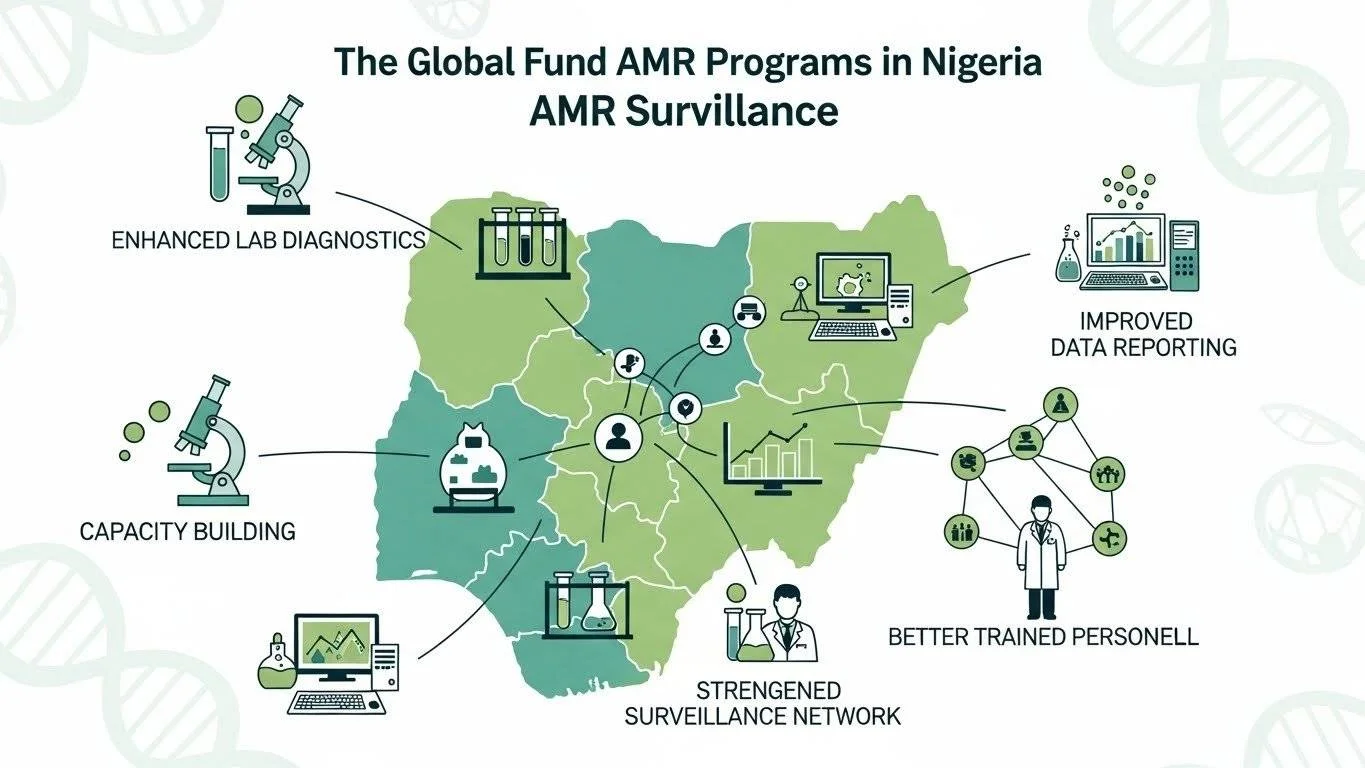
The Global Fund AMR programs Nigeria work hand-in-hand with local health authorities to fill gaps in lab capacity, reporting, and workforce training. Key interventions include:
- Upgrading laboratories and diagnostic tools
- Training health workers to recognize and report AMR cases promptly
- Improving reporting systems for quicker decision-making
Integration with Existing Global Health Programs
Nigeria’s previous collaborations with the Global Fund on HIV, TB, and malaria have created a strong foundation for AMR work. By leveraging the same networks, the Global Fund antimicrobial resistance Nigeria projects integrate AMR monitoring without reinventing the wheel.
Key strategies include:
- Data Flow Integration – Using existing digital platforms for AMR reporting
- Health Worker Engagement – Training teams already familiar with Global Fund procedures
- Resource Sharing – Deploying testing kits and educational tools through established supply chains
This strategy allows AMR efforts to reach urban centers and remote rural areas efficiently.
Strengthening the National AMR Response
The Nigerian National Antimicrobial Stewardship Taskforce (NNAST) partners with Global Fund programs to ensure proper antibiotic use. Together, they coordinate:
- Hospital audits
- Training programs on rational drug use
- Monitoring and reporting AMR trends
By building capacity in local hospitals, clinics, and labs, these initiatives strengthen Nigeria’s national AMR surveillance system.
Policy Implementation and Future Outlook
AMR policies in Nigeria are now more robust thanks to Global Fund support. This includes:
- Clear protocols for infection testing and treatment
- Guidelines for reporting resistance data
- Educational campaigns promoting responsible antibiotic use
The Global Fund AMR programs Nigeria ensure that policy is not just written but actively applied, helping health teams respond faster to emerging resistance.
Looking ahead, Nigeria plans to expand AMR surveillance networks to more rural and underserved areas. Real-time digital reporting tools and trained personnel will provide a complete picture of AMR patterns nationwide.
Conclusion
The Global Fund AMR programs Nigeria are vital for controlling drug-resistant infections. By integrating global strategies, supporting lab and workforce development, and strengthening national policies, these programs ensure effective AMR surveillance across Nigeria. This collaborative effort safeguards public health, optimizes treatments, and secures antibiotics for future generations.
FAQs
What is the Global Fund AMR program Nigeria?
It is a strategic initiative that strengthens AMR surveillance, lab capacity, and health workforce skills in Nigeria.
How does the Global Fund AMR initiative improve surveillance?
By providing labs, digital tools, training, and guidance, the initiative ensures timely detection and reporting of resistant infections.
What role does NNAST play in Nigeria’s AMR response?
NNAST coordinates hospital audits, educational programs, and AMR monitoring alongside Global Fund initiatives.
Why is AMR policy implementation important now?
Effective policy ensures responsible antibiotic use and prevents the spread of resistance.
How do AMR projects protect future public health in Nigeria?
They enable early detection, accurate reporting, and informed treatment, preserving antibiotics’ effectiveness.