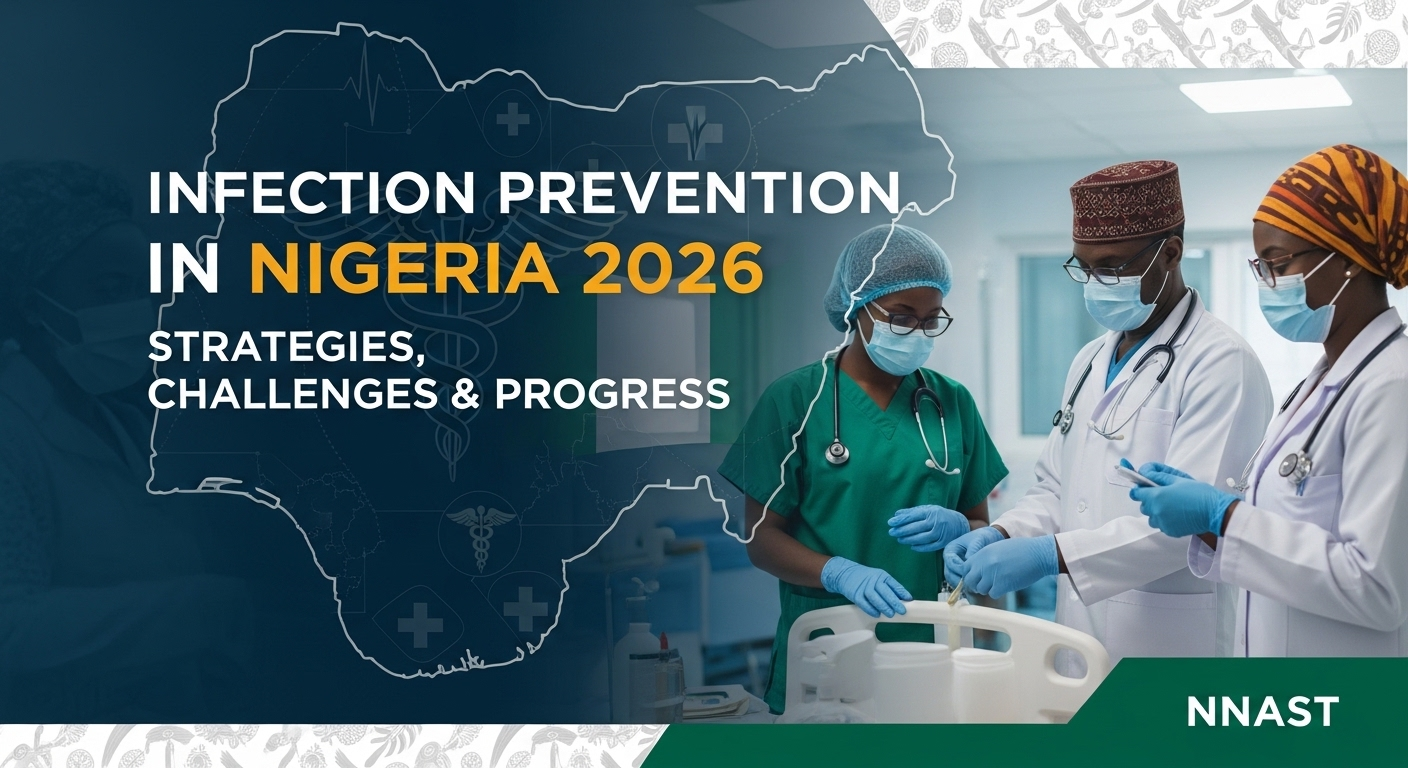
The Nigerian Center for Disease Control and Prevention emphasizes infection prevention as foundational to antimicrobial resistance control because preventing infections eliminates the need for antimicrobial treatment entirely.
Yet infection prevention in Nigeria lags far behind documented needs. Facilities lack basic supplies. Healthcare workers miss training. Compliance monitoring remains weak.
As we are living in 2026, understanding current challenges and measuring progress becomes essential to reducing preventable infections that burden patients, systems, and national health security.
Why Programs for Infection Prevention in Nigeria Continue Failing
Infection prevention in Nigeria fails not from lack of knowledge but from implementation gaps. Healthcare workers generally understand hand hygiene importance but compliance rates hover around 30-40% in monitored facilities. The reasons are systemic rather than individual. Many facilities lack a consistent water supply, making handwashing physically impossible during certain shifts.
Alcohol-based hand sanitizers remain unavailable or irregularly stocked due to budget constraints. Overcrowding forces staff to care for more patients than safety allows, creating rushed interactions where prevention steps get skipped.
Inadequate staffing ratios mean fewer hands to complete work, tempting shortcuts. Equipment shortages force reuse of single-use items or the inadequate sterilization of reusable instruments. Supply chain failures leave facilities without basic personal protective equipment like gloves and gowns. Infrastructure deterioration creates environments where maintaining cleanliness becomes extremely difficult.
These aren’t excuses but obstacles requiring systematic solutions rather than individual behavior change alone. Prevention programs built on education and guidelines alone fail when physical resources and enabling environments don’t exist.
Principles of Infection Prevention & Control Guiding Programs
The principles of infection prevention and control provide frameworks for program design and implementation. Standard precautions apply to all patient care regardless of known infection status, assuming all blood and body fluids potentially carry infectious agents. This prevents transmission from undiagnosed infections.
Transmission-based precautions add protection for known infections spread through contact, droplets, or airborne routes. Hierarchy of controls prioritizes elimination and engineering solutions over personal protective equipment and administrative controls.
Engineering controls, like negative pressure isolation rooms or sharps disposal containers, reduce infection risk through design. Administrative controls establish policies, training, and monitoring systems. Personal protective equipment provides final barrier protection. Aseptic technique prevents microorganism introduction during invasive procedures through systematic sterile practices.
Environmental cleaning and disinfection eliminate pathogens from surfaces and equipment. Surveillance detects infection patterns, identifies outbreaks, and measures prevention program effectiveness.
These principles of infection prevention and control apply universally but require context-specific adaptation for Nigerian facility realities and resource constraints.
Daily Obstacles Healthcare Facilities Confront
- Nigerian healthcare facilities battling to implement infection prevention face relentless obstacles.
- Budget allocations rarely prioritize IPC supplies despite prevention being cost-effective compared to treating infections.
- Procurement systems favor visible equipment like imaging machines over unglamorous supplies like hand sanitizer and disinfectant.
- Training programs reach small percentages of staff while high turnover means constant need for repeated education.
- Supervision and monitoring systems lack personnel and tools. Infection control committees exist on paper but meet irregularly without administrative authority to enforce policies.
- Laboratory capacity limitations prevent infection surveillance because microbiology testing isn’t available or affordable.
- Architectural designs of older facilities make isolation and infection control extremely difficult with open wards, shared bathrooms, and inadequate ventilation.
- Waste management systems fail to separate infectious waste properly.
- Water supply interruptions occur unpredictably.
- Electrical outages shut down autoclaves and disinfection equipment.
- Patient overload beyond facility capacity strains all systems simultaneously.
- Healthcare workers themselves face occupational exposure risks without post-exposure prophylaxis or adequate compensation for work-related infections.
These daily realities make infection prevention in Nigeria extraordinarily challenging.
Measurable Progress as 2026 Approaches
Progress in infection prevention in Nigeria occurs incrementally through multiple pathways. Policy frameworks have strengthened with national IPC guidelines adapted to local contexts.
More facilities designate IPC focal persons, though their effectiveness varies. Hand hygiene campaigns increase awareness even where compliance lags. Some tertiary centers implement surgical safety checklists. Birth facilities adopt clean birth practices, reducing neonatal infections. Vaccination coverage for vaccine-preventable diseases continues expanding. Safe water access improves slowly through infrastructure investments. Healthcare waste management receives more regulatory attention. The progress isn’t sufficient or fast enough, but it provides foundations for continued improvement.
Prevention Works When Systems and People Align
Infection prevention in Nigeria will protect patients and conserve antimicrobials only when systemic supports align with frontline practice.
Applying principles of infection prevention and control systematically addresses root causes rather than surface symptoms. Acknowledging daily facility obstacles creates realistic pathways forward instead of demanding impossible perfection. Measuring progress honestly motivates continued effort while identifying gaps requiring attention.
Building sustainable capacity through training, infrastructure, systems, and leadership creates lasting change beyond individual project cycles and a healthy, smart community.
FAQs
Does IPC reduce antimicrobial use significantly?
Yes, effective IPC reduces infections requiring antimicrobial treatment. Studies show surgical site infection prevention programs decrease post-operative antibiotic use by 20-40%. Catheter-associated bloodstream infection prevention eliminates infections that would require prolonged intravenous antibiotics. Preventing infections prevents antimicrobial exposures that select for resistance.
What IPC failures most commonly cause outbreaks?
Hand hygiene non-compliance causes most healthcare-associated transmission. Inadequate sterilization of surgical instruments causes procedure-related outbreaks. Contaminated injectable medications cause bloodstream infection outbreaks. Inadequate isolation of contagious patients spreads respiratory and enteric infections. Environmental contamination with spore-forming organisms like Clostridium difficile causes recurrent outbreaks.
How effective is hand hygiene compliance improvement?
Hand hygiene interventions can increase compliance 20-40 percentage points when multimodal strategies combine education, reminders, infrastructure improvements, monitoring, and feedback. However, sustaining improvements requires continuous effort. Compliance typically declines without ongoing reinforcement. Even modest compliance improvements significantly reduce transmission and infection rates.