
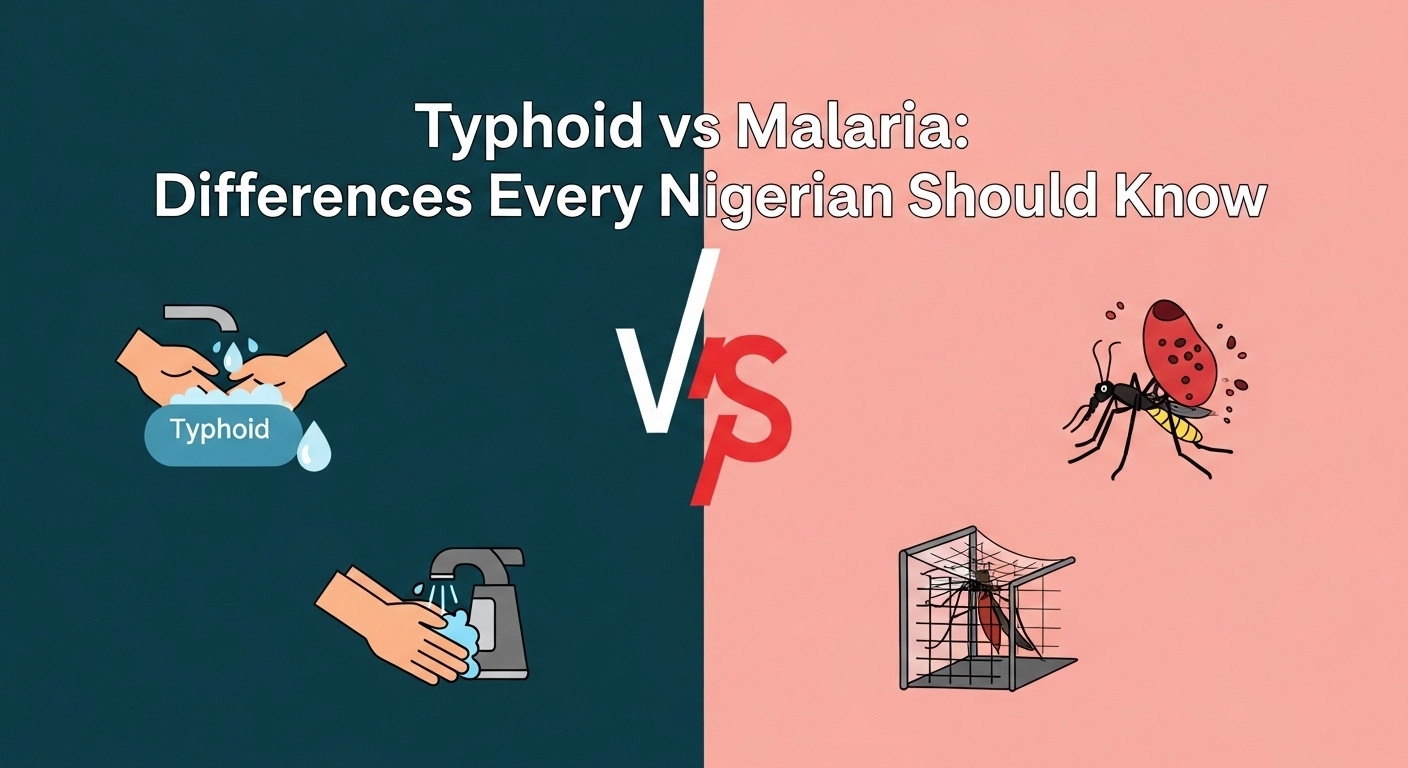
Proper antimicrobial stewardship in Nigeria depends on accurate diagnosis, and nowhere is misdiagnosis more common than with typhoid and malaria. Both illnesses present with fever, body aches, and fatigue. However, they are caused by entirely different pathogens and require completely different treatments. Confusing the two can lead to delayed recovery and dangerous misuse of medicines.
What Is Typhoid?
Symptoms of Typhoid in Nigeria
Typhoid fever is caused by the bacterium Salmonella typhi, which spreads through contaminated food and water. The symptoms of typhoid in Nigeria typically include a sustained high fever, headache, abdominal pain, and either constipation or diarrhoea.
Unlike malaria, typhoid tends to worsen gradually. The fever rises steadily over several days rather than appearing suddenly. A characteristic rose-coloured rash may also appear on the chest or abdomen in some patients.
How Typhoid Spreads in Nigeria
Typhoid spreads through the faecal-oral route. Drinking water contaminated with human waste is the primary transmission method in Nigeria. Poor sanitation infrastructure in many urban and rural communities makes this disease endemic in several parts of the country.
Street food prepared with unclean water is also a significant risk factor. Therefore, handwashing before meals and after using the toilet remains one of the most powerful preventive measures available.
What Is Malaria?
Malaria Symptoms Nigeria Patients Commonly Experience
Malaria is caused by the Plasmodium parasite transmitted through the bite of infected female Anopheles mosquitoes. Malaria symptoms in Nigeria include sudden high fever, chills, sweating, muscle pain, nausea, and vomiting. The fever often comes in cycles, typically every 48 to 72 hours depending on the parasite species.
Severe malaria can cause confusion, seizures, and organ failure, particularly in children under five and pregnant women. It remains one of the leading causes of death in Nigeria.
Malaria Transmission Patterns in Nigeria
Malaria is endemic across all 36 Nigerian states, though transmission is higher in humid, low-lying areas. The rainy season dramatically increases mosquito populations and therefore raises the risk of infection during those months.
Simultaneously, indoor residual spraying and insecticide-treated bed nets remain the most cost-effective prevention tools currently available to Nigerian households.
The Key Difference Between Malaria and Typhoid
Typhoid vs Malaria: Onset and Fever Pattern
The difference between malaria and typhoid begins with how each fever behaves. Malaria fever is often sudden and cyclical. Typhoid fever is gradual and sustained. This distinction helps clinicians differentiate between the two, though laboratory confirmation is always necessary.
Diagnosis Methods
Malaria is diagnosed using a rapid diagnostic test (RDT) or blood smear. Typhoid is confirmed through a Widal blood test or blood culture. Self-diagnosing either disease is unreliable and can lead to incorrect treatment decisions.
Many Nigerians treat both conditions simultaneously without any laboratory test, which contributes to drug resistance and treatment failure. Always seek professional diagnosis before starting any medication.
Treatment: Typhoid vs Malaria
Treating Typhoid in Nigeria
Typhoid is treated with antibiotics such as ciprofloxacin or azithromycin. The full course must be completed even if the patient feels better before it ends. Stopping early contributes to antibiotic resistance and risks relapse.
Treating Malaria in Nigeria
Malaria is treated with artemisinin-based combination therapies (ACTs), which are the recommended first-line treatment in Nigeria. Chloroquine is no longer effective due to widespread parasite resistance. NNAST supports initiatives to improve diagnostic accuracy and appropriate treatment across Nigerian health facilities.
Frequently Asked Questions
Can you have typhoid and malaria at the same time?
Yes, co-infection is possible and documented in Nigeria. Studies show that concurrent typhoid and malaria infections complicate diagnosis and worsen patient outcomes. Laboratory testing is essential to confirm which infections are present.
How long does typhoid last compared to malaria?
Typhoid typically lasts three to four weeks without treatment. Uncomplicated malaria, when treated promptly, usually resolves within one to two weeks. Both conditions can become life-threatening if left untreated.
Is typhoid contagious like malaria?
Typhoid spreads person-to-person through contaminated food and water. Malaria is not contagious between people and can only be transmitted through mosquito bites or, rarely, blood transfusions. Understanding this difference between malaria and typhoid is vital for prevention planning.