Picture a two-year-old burning up with a fever that just won’t drop. The first antibiotic does nothing. The second does nothing either. The family sits by the bed, helpless, while the bill climbs and the child fades.
That scene isn’t rare anymore. It’s the everyday impact of antimicrobial resistance in Nigeria, playing out in wards and living rooms across the country.
We tend to discuss resistance like a lab puzzle, all genes and Petri dishes. But the real wreckage is human. It hits patients first, then families, then whole neighbourhoods. Let’s follow it outward. NNAST watches every layer of this.
It Begins At A Single Bedside
The first, sharpest effects of AMR in Nigeria show up right here, in one hospital bed.
A wound that refuses to heal. A chest infection that laughs off the usual drugs. Treatments that worked five years ago now buy nothing but a little time.
That’s one of the cruelest consequences of antimicrobial resistance. An ordinary illness, the kind that should clear in a week, turns into a slow and frightening fight.
And when the front-line drug fails, doctors reach for stronger, pricier ones. If those exist. If the family can somehow pay. Sometimes there’s nothing stronger left to try, and that’s the moment doctors dread most.
Then It Reaches The Whole Family
Here’s where it stops being purely medical.
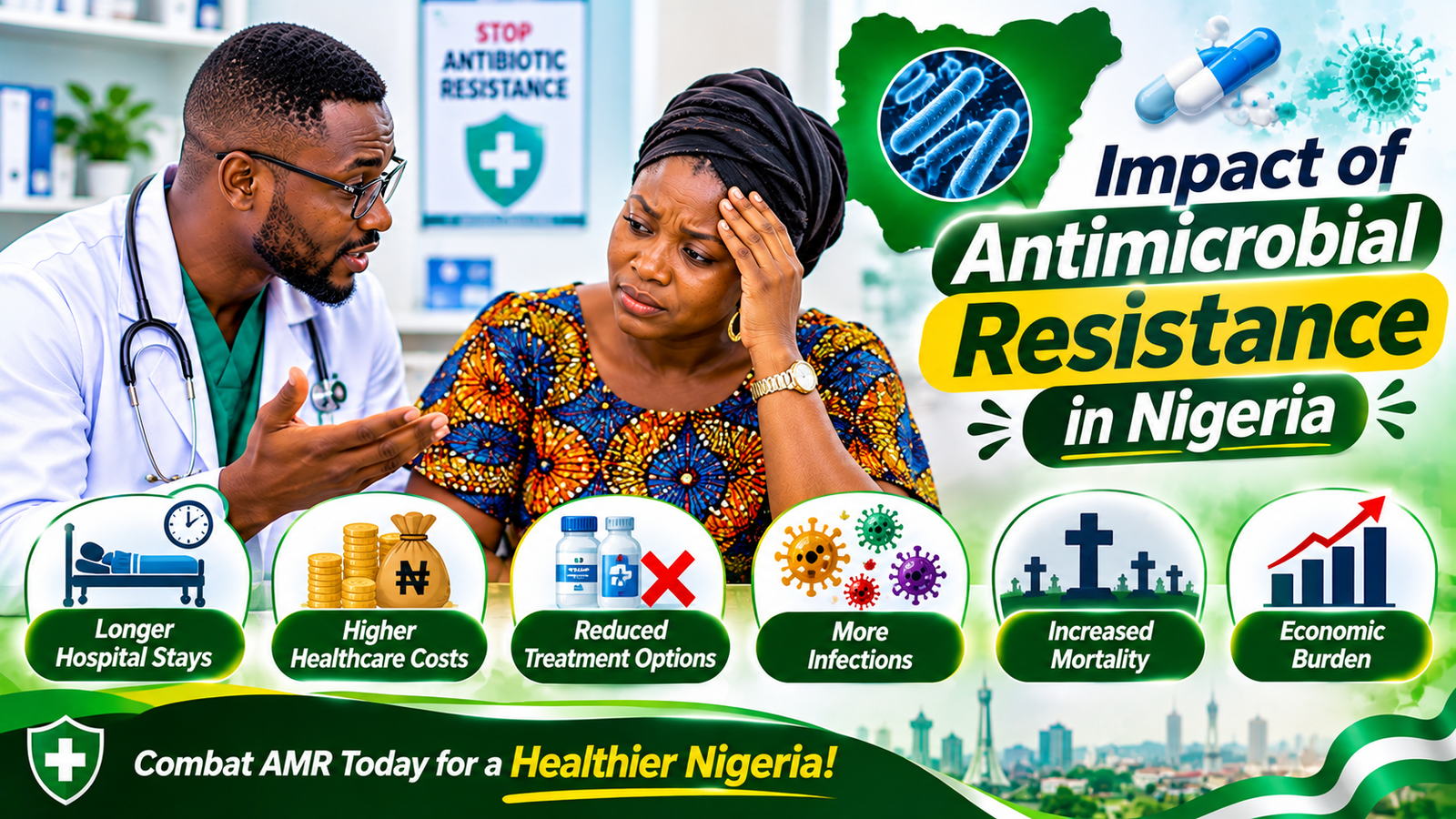
A failed treatment means longer stays, second-line drugs, more tests, more transport, more lost workdays. The consequences of antimicrobial resistance quietly turn into a household money crisis.
It’s not unusual to hear of families selling what little they own to cover a bill that resistance tripled. That isn’t bad luck. That’s a system letting them down.
One sick child. One stubborn infection. A whole home knocked sideways for months.
A parent stops earning to sit at the bedside. Siblings miss school. Savings meant for rent or seed money vanish into pharmacy receipts.
And It Wears Down Whole Communities
Now zoom out. Multiply that single story by millions, and you get the true effects of AMR in Nigeria.
When common drugs stop working, everything built on top of them gets shakier. Safe childbirth. Routine surgery. Cancer care. Even a bad tooth.
These are the consequences of antimicrobial resistance nobody writes into a budget. Hospitals clog up. Faith in clinics slips. Preventable deaths stack up quietly, one at a time.
Resistant bugs don’t stay put, either. They travel through homes, markets, and maternity wards, sparing no one. A strain that starts in one ward can seed an outbreak the next town over.
The Ones Who Suffer Most
Resistance isn’t evenly cruel. It leans hardest on the people with the least.
Newborns with sepsis have almost no margin once the usual drugs fail. Mothers after childbirth, the elderly, anyone already frail- they feel it first and worst.
And the poorer the home, the fewer options when the cheap drug quits. It widens gaps that were already far too wide.
So How Did We Land Here?
Fair question. And the honest answer stings a bit.
A huge share of this traces back to the misuse of antibiotics in Nigeria. Not villainy, just habit, convenience, and a health system stretched paper-thin. The antibiotic resistance causes here aren’t exotic at all. They’re depressingly ordinary, which is oddly good news, because ordinary things can be changed.
Pills Sold Like Sweets
You can buy strong antibiotics off a roadside tray, no prescription, no questions asked. That casual misuse of antibiotics in Nigeria is a major engine of the entire mess. Nobody sets out to breed superbugs. It happens one convenient purchase at a time.
Courses We Quit Halfway
We feel better by day three, so we stop. The survivors regroup, tougher than before. Half-finished treatment is one of the most common causes of antibiotic resistance. The infection looks beaten. It isn’t. It’s just quietly picking its survivors.
Fakes and Leftovers
Counterfeit and under-strength drugs harm without ever curing. Add hoarded, shared-around tablets, and you complete a grim list of antibiotic resistance causes. Weak drugs are almost worse than none, since they school bacteria without ever killing them.
What Actually Turns This Around
Here’s an honest take. None of this is destiny. Every single driver on that list is something we can change.
Curbing the misuse of antibiotics in Nigeria is where the turnaround truly begins. Test before treating. Finish the course. Quit buying antibiotics like they’re sweets.
Do that at scale, and the worst effects of AMR in Nigeria move from inevitable to preventable. That’s the entire point of what NNAST keeps pushing for.
The patient, the family, the community. All three can be spared. But only if we move before the drugs run out. And we still can. That window is open, but not forever.