
WHO antimicrobial resistance in Nigeria data consistently highlights one critical driver of resistance: antibiotics are routinely prescribed for infections they cannot treat. The confusion between bacterial and viral infections is not merely a medical technicality. It is a knowledge gap that contributes directly to the antibiotic resistance crisis affecting millions of Nigerians.
What Is a Bacterial Infection?
How Bacteria Cause Disease
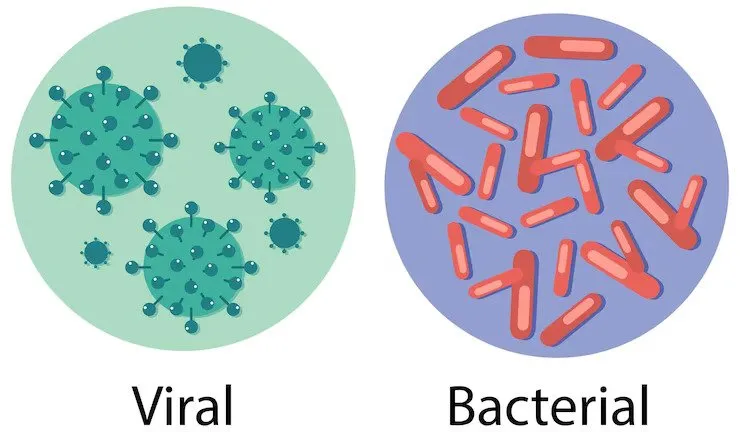
Bacteria are single-celled living organisms that can survive and reproduce independently. Some bacteria are beneficial to the human body, while others cause infections that range from mild to life-threatening.
Common bacterial infections in Nigeria include tuberculosis, typhoid fever, bacterial pneumonia, and urinary tract infections. These infections can generally be treated effectively with the appropriate antibiotic, provided the bacteria remain sensitive to the drug.
Signs of a Bacterial Infection
Bacterial infections often produce localised symptoms. A throat infection caused by Streptococcus bacteria, for instance, causes intense throat pain, swollen lymph nodes, and fever without the typical runny nose associated with viral colds.
Bacterial infections may also produce pus, as the body’s immune system sends white blood cells to fight the bacteria. A wound that is becoming red, warm, swollen, and oozing is likely infected with bacteria.
What Is a Viral Infection?
How Viruses Differ from Bacteria
Viruses are not living organisms in the traditional sense. They are microscopic particles of genetic material that invade host cells and use those cells to replicate. Antibiotics have absolutely no effect on viruses. This is perhaps the most important fact every Nigerian needs to understand about infection types.
Common viral infections in Nigeria include influenza, the common cold, HIV, hepatitis, COVID-19, and measles. None of these conditions benefit from antibiotic treatment unless there is a secondary bacterial infection present.
Difference Between Virus and Bacteria: Key Indicators
Viral infections tend to cause more diffuse symptoms across the body. A cold typically brings a runny nose, mild fever, general fatigue, and sneezing simultaneously. The symptoms spread gradually and resolve on their own within a week or two.
Bacterial infections are more likely to cause high fever, produce localised severe pain, and worsen without specific treatment. However, distinguishing between the two without laboratory testing is not always straightforward, which is why professional diagnosis is essential.
Why the Confusion Is So Costly for Nigeria
Infection Types Nigeria: The Prescription Problem
In Nigeria, patients frequently demand antibiotics for viral illnesses. Many healthcare providers comply, either because of time pressure, resource limitations, or patient expectations. The result is that antibiotics are consumed in vast quantities for conditions they cannot treat.
Every unnecessary antibiotic course is a dose that selects for resistant bacteria without providing any therapeutic benefit. This cycle is a primary driver of the infection types Nigeria struggles with becoming increasingly resistant to treatment.
Economic Impact on Nigerian Families
Purchasing antibiotics unnecessarily is a financial burden for families already stretched thin. Furthermore, when the correct treatment is eventually needed, resistant bacteria may render even appropriately prescribed antibiotics ineffective, compounding both the health and financial impact.
How to Tell the Difference and Seek the Right Treatment
Visit a Healthcare Professional
The safest approach is always to consult a qualified healthcare worker before taking any antibiotic. A proper clinical assessment, ideally supported by laboratory testing, can identify whether the infection is bacterial or viral.
Trust Diagnostics Over Assumptions
Rapid diagnostic tools are increasingly available in Nigerian health facilities. Malaria RDTs, throat swabs, and urine tests can quickly clarify the nature of an infection. NNAST (https://nnast.org/) advocates for expanded diagnostic access across Nigeria as a cornerstone of responsible antimicrobial stewardship.
Frequently Asked Questions
Can a viral infection turn into a bacterial infection?
Yes. A primary viral infection can weaken the body’s immune defences, creating an opportunity for secondary bacterial infections to develop. This is why some patients with influenza subsequently develop bacterial pneumonia, which does require antibiotic treatment.
Why do some doctors still prescribe antibiotics for viral infections in Nigeria?
Prescribers sometimes use antibiotics prophylactically to prevent secondary bacterial infections, particularly in resource-limited settings where monitoring is difficult. However, routine prescribing of antibiotics for uncomplicated viral infections is considered inappropriate practice and is a target of antimicrobial stewardship programmes.
Are antiviral medications available in Nigeria?
Antiviral medications for HIV, hepatitis B, and influenza are available in Nigeria, though access varies by location and cost. For most common viral infections like colds, supportive care (rest, hydration, symptom relief) remains the recommended approach.