


The burden of antimicrobial resistance in Nigeria extends far beyond clinical outcomes to the economic realm, affecting households, healthcare systems, and national development. As resistant infections become more prevalent, treatment costs escalate while productivity declines, creating compound economic pressures on an already strained health system.
The burden of antimicrobial resistance in Nigeria manifests in prolonged hospital stays, expensive second-line antibiotics, lost work days, and catastrophic health expenditures that push families into poverty.
Therefore, organizations like the Nigerian National Antimicrobial Stewardship Taskforce (NNAST) work to mitigate these economic impacts through evidence-based interventions. By promoting rational antibiotic use and strengthening infection prevention, NNAST helps reduce unnecessary healthcare expenditures associated with resistant infections.
Economic Impact of Antimicrobial Resistance in Nigeria

The economic impact of antimicrobial resistance in Nigeria operates at multiple levels. At the household level, families face increased out-of-pocket expenses for longer courses of treatment and more expensive antibiotics. Many Nigerians lack health insurance, resulting in these costs being borne directly by household budgets.
Consequently, the economic impact of antimicrobial resistance in Nigeria includes catastrophic health expenditure, where families spend more than 40% of their non-food budget on healthcare. This financial strain often forces families to make impossible choices between treatment and other necessities.
Direct Medical Costs
Direct medical costs represent the most immediate economic impact of antimicrobial resistance in Nigeria. These include expenses for diagnostics, medications, hospital beds, and healthcare provider services. Resistant infections require more diagnostic tests to identify effective treatments.
Additionally, second-line antibiotics cost significantly more than first-line options. For example, carbapenems and other reserve antibiotics may cost ten to twenty times more than standard treatments, placing them beyond reach for many patients.
Indirect Economic Losses
Beyond direct medical costs, the economic impact of antimicrobial resistance in Nigeria includes substantial indirect losses. Prolonged illness means lost work days for patients and caregivers, reducing household income and national productivity.
Furthermore, premature death from resistant infections robs families of breadwinners and deprives the economy of productive workers. Children who lose parents to AMR face educational disruption and reduced lifetime opportunities, perpetuating cycles of poverty.
Healthcare System Costs
The economic impact of antimicrobial resistance in Nigeria strains healthcare systems significantly. Hospitals allocate more resources to isolation facilities, infection control supplies, and specialized staff training. Longer hospital stays occupy beds that could be used by other patients.
Moreover, healthcare facilities must invest in laboratory capacity for resistance testing and in surveillance systems to monitor trends. These necessary investments divert funds from other critical health priorities in resource-constrained settings.
Economic Burden of AMR in Nigeria

The economic burden of AMR in Nigeria encompasses both measurable costs and harder-to-quantify impacts. While precise national estimates remain limited, available evidence suggests the burden is substantial and growing.
However, the economic burden of AMR in Nigeria extends beyond healthcare expenditures to affect agricultural productivity, food security, and international trade. Resistance in food-producing animals raises production costs and reduces export competitiveness.
Quantifying the Burden
Estimating the economic burden of AMR in Nigeria faces methodological challenges. Limited surveillance data make it difficult to determine the true prevalence of resistant infections. Healthcare cost data is often incomplete or unreliable.
Nevertheless, facility-based studies provide glimpses of the burden. Research indicates resistant infections increase treatment costs by 200-300% compared to susceptible infections. Extended hospital stays alone can double or triple total healthcare expenses.
Macroeconomic Implications
The economic burden of AMR in Nigeria threatens broader development goals. Reduced workforce productivity slows economic growth. High healthcare costs constrain the government’s capacity to invest in education, infrastructure, and other development priorities.
Similarly, AMR undermines progress toward universal health coverage. Rising treatment costs make healthcare less affordable, potentially reversing gains in health access achieved over the past decade.
AMR and Inflation in Nigeria
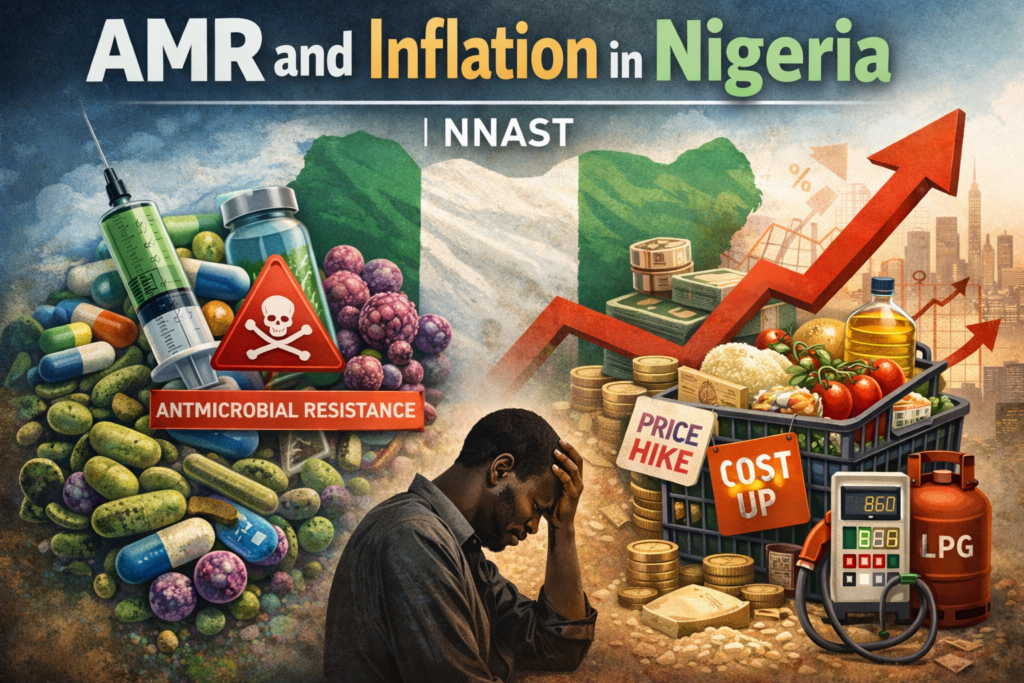
The relationship between AMR and inflation in Nigeria creates a particularly troubling dynamic. As inflation increases the prices of imported antibiotics and medical supplies, healthcare becomes less accessible. Meanwhile, AMR necessitates more expensive treatments precisely when affordability declines.
Therefore, AMR and inflation in Nigeria form a reinforcing cycle that exacerbates health inequities. Wealthy individuals can access effective treatments despite rising costs, while economically disadvantaged populations face impossible barriers to care.
Currency Devaluation Effects
Nigeria imports most antibiotics and medical supplies, making the link between AMR and inflation particularly acute. When the naira weakens, prices for imported medicines increase proportionally. Second-line antibiotics needed for resistant infections become prohibitively expensive.
Consequently, patients may discontinue treatment early due to cost, inadvertently promoting further resistance development. This creates a vicious cycle where inflation drives behaviors that worsen AMR, which in turn requires even more expensive interventions.
Impact on Treatment Access
The intersection of AMR and inflation in Nigeria severely limits treatment access for vulnerable populations. Rural communities with limited purchasing power face the greatest challenges. Urban poor populations also struggle to afford increasingly expensive antibiotics.
Additionally, inflation affects healthcare facilities themselves. Hospitals struggle to stock adequate supplies of effective antibiotics when prices fluctuate unpredictably. This supply instability compromises the quality of care and patient outcomes.
Policy Responses
Addressing the relationship between AMR and inflation in Nigeria requires coordinated policy responses. Domestic pharmaceutical manufacturing could reduce dependence on imports and price volatility. Strategic antibiotic stockpiles might buffer against supply disruptions.
Furthermore, expanding health insurance coverage could protect households from catastrophic expenses related to resistant infections. Subsidies for essential antibiotics may help ensure continued access despite inflationary pressures.
FAQs
What is the economic impact of antimicrobial resistance in Nigeria?
The economic impact of antimicrobial resistance in Nigeria includes direct medical costs, indirect productivity losses, and broader macroeconomic effects. Direct costs include the use of expensive antibiotics, prolonged hospitalization, and additional diagnostic tests required for infections resistant to antibiotics.
What is the relationship between AMR and inflation in Nigeria?
The relationship between AMR and inflation in Nigeria is bidirectional and reinforcing. Inflation increases the prices of imported antibiotics and medical supplies, making treatments less affordable. When standard antibiotics become expensive, some patients use suboptimal doses or discontinue treatment early, thereby promoting the development of resistance.
What are the long-term economic consequences of AMR in Nigeria?
The long-term economic consequences of AMR in Nigeria could be catastrophic if left unaddressed. Continued escalation of resistance could render common medical procedures, such as surgery, chemotherapy, and organ transplantation, too risky to perform safely, thereby reducing healthcare system capacity.