Nigeria’s hospitals face a quiet crisis that most people don’t see coming until it’s too late. A patient arrives with a routine infection, but the antibiotics that should work don’t. The infection worsens. Days blur into weeks, and what was supposed to be simple becomes life-threatening.
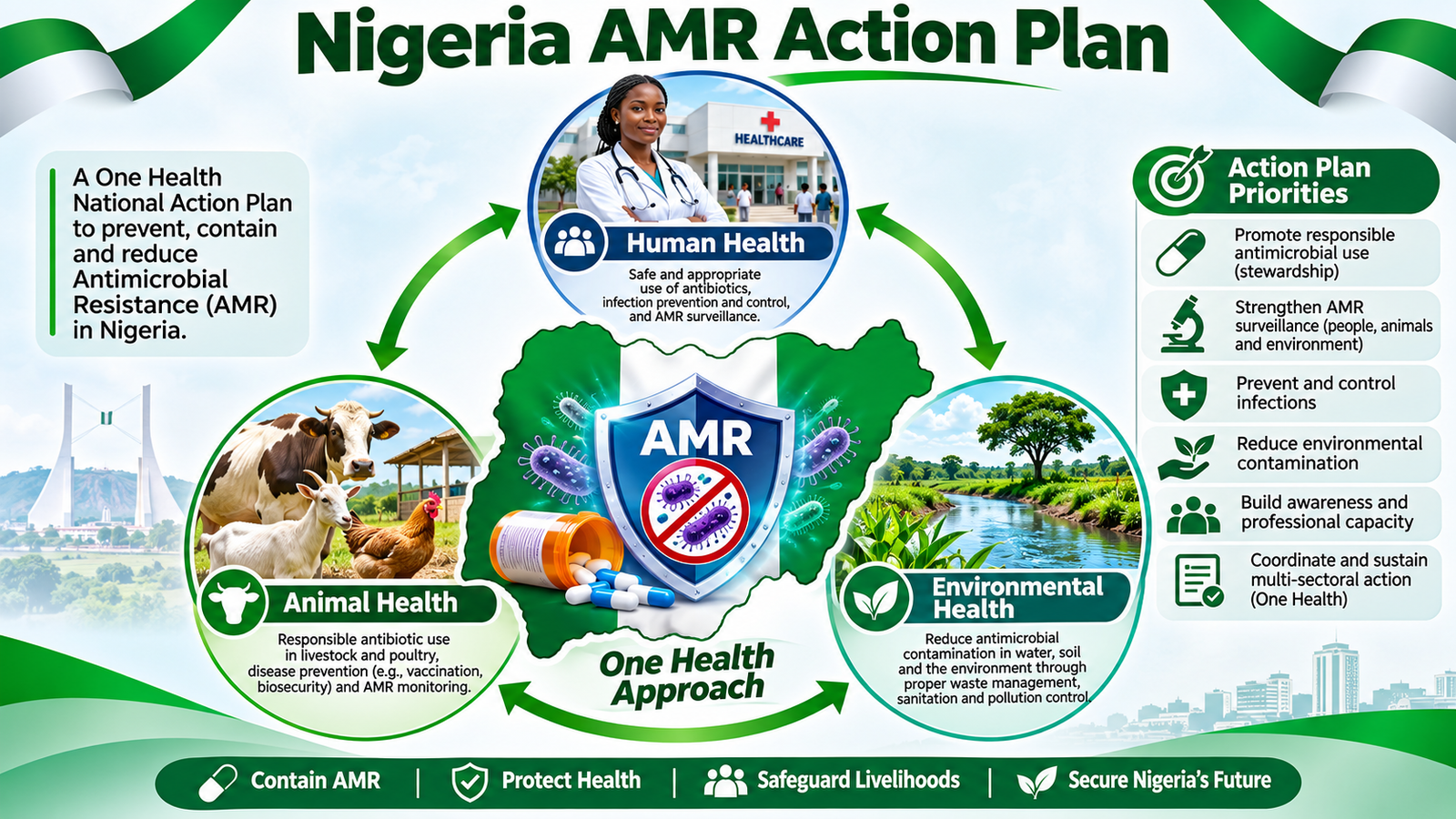
This is antimicrobial resistance, and we see how it reshapes healthcare across Nigeria. Case-by-case responses don’t work when the problem keeps growing. That’s why the Nigeria National Action Plan on Antimicrobial Resistance exists, a roadmap built specifically for how Nigerian hospitals, clinics, and communities actually work.
So how exactly does this plan strengthen the health system? Let’s walk through it together.
The Nigeria AMR Action Plan Framework
A Strategy Built for Nigeria’s Reality
The Nigeria AMR Action Plan isn’t borrowed from another country’s handbook and dropped here, hoping it sticks. We built it on what Nigerian healthcare actually looks like, the rural clinics with limited lab access, the urban hospitals drowning in patient volume, the pharmacies where antibiotics sit on shelves next to pain relievers.
The plan tackles five core pillars: awareness, surveillance, stewardship, infection prevention, and research. Each one addresses a real gap in how Nigeria currently handles resistance. Because the plan is national, federal health agencies, state governments, private hospitals, and community health workers all move in the same direction instead of everyone improvising alone.
That coordination matters more than it sounds. When one clinic treats resistance differently than the clinic ten kilometers away, you build resistance faster. When surveillance data from Lagos doesn’t connect to data from Kano, you’re flying blind. The plan fixes that fragmentation.
How Coordination Strengthens the Entire System
Before the action plan, AMR surveillance in Nigeria was scattered. One hospital tracked antibiotic use. Another didn’t. Labs reported results in different formats. State health departments had no unified data to work with. The system had gaps so wide that resistance could spread undetected.
We created a surveillance network that connects every level. Hospitals report standardized data. Laboratories send results through one channel. State coordinators compile data. The picture becomes clear. When resistance patterns emerge, health officials actually see them coming instead of discovering them after people are already dying.
This surveillance feeds directly into treatment decisions. Doctors stop guessing what antibiotic might work and start prescribing based on real local resistance data. That shift alone saves lives and preserves the antibiotics that still work.
Strengthening Defenses Through the Nigeria Antimicrobial Resistance Strategy
Stopping Resistance Before It Starts
The plan doesn’t just react to resistance. We work to prevent it. Infection prevention measures- hand hygiene, sanitation, sterilization protocols- are written into the strategy across every healthcare facility in Nigeria.
When fewer people catch infections in the first place, fewer infections need antibiotics. When infections do happen, proper prevention protocols mean they’re less likely to develop resistance while spreading. These sound simple, but they’re the foundation that everything else rests on.
Antibiotic Stewardship That Actually Works in Nigerian Settings
Combatting antimicrobial resistance through stewardship means changing how antibiotics are prescribed, stored, and tracked. We train pharmacists and doctors on when antibiotics are truly necessary and when they’re not. We eliminate the practice of selling antibiotics over the counter without a prescription and stop patients from buying partial courses.
These practices existed partly because of necessity; limited access to healthcare means people self-treat. But they accelerate resistance. Through this action plan, we address this by improving healthcare access while simultaneously controlling how antibiotics flow into the system.
What This Means for Nigeria’s Health Future
The Nigeria antimicrobial resistance strategy isn’t built for quick wins. It’s built for years of steady progress. Surveillance takes time to show patterns. Behavior change takes time. Resistance reduction takes years of consistency.
But the foundation matters. When every hospital follows one protocol, when data flows from clinics to state coordinators to national oversight, when patients have actual access to testing instead of guessing at diagnoses, the system becomes stronger. We believe this is how Nigeria builds the health system we all need.
A Stronger Health System Ahead
The Nigeria AMR Action Plan strengthens Nigeria’s health system by treating resistance as a system problem, not an individual one. We at NNAST work within this framework every day, reminding Nigerians that the plan only works when everyone, including patients, doctors, and pharmacists follows through. Your part is simple; trust the testing, complete the treatment, and help us stop resistance before it stops us.