
The Nigerian National Antimicrobial Stewardship Taskforce (NNAST) recognises that viral haemorrhagic fevers like Lassa fever place enormous strain on healthcare systems and frequently lead to inappropriate antibiotic use when misdiagnosed.
Understanding Lassa fever, its symptoms, transmission, and prevention empowers Nigerians to protect themselves while supporting the rational use of medicines.
What Is Lassa Fever?
The Virus Behind Lassa Fever Nigeria
Lassa fever is caused by the Lassa virus, a member of the Arenaviridae family. It was first identified in 1969 in Lassa, a town in Borno State, Nigeria. The disease is endemic in West Africa, with Nigeria bearing the heaviest burden of confirmed cases annually.
Unlike bacterial infections, Lassa fever is a viral illness. Antibiotics are ineffective against the Lassa virus. The antiviral drug ribavirin is the primary treatment, and its success depends heavily on early administration.
How Lassa Fever Spreads
The Role of the Multimammate Rat
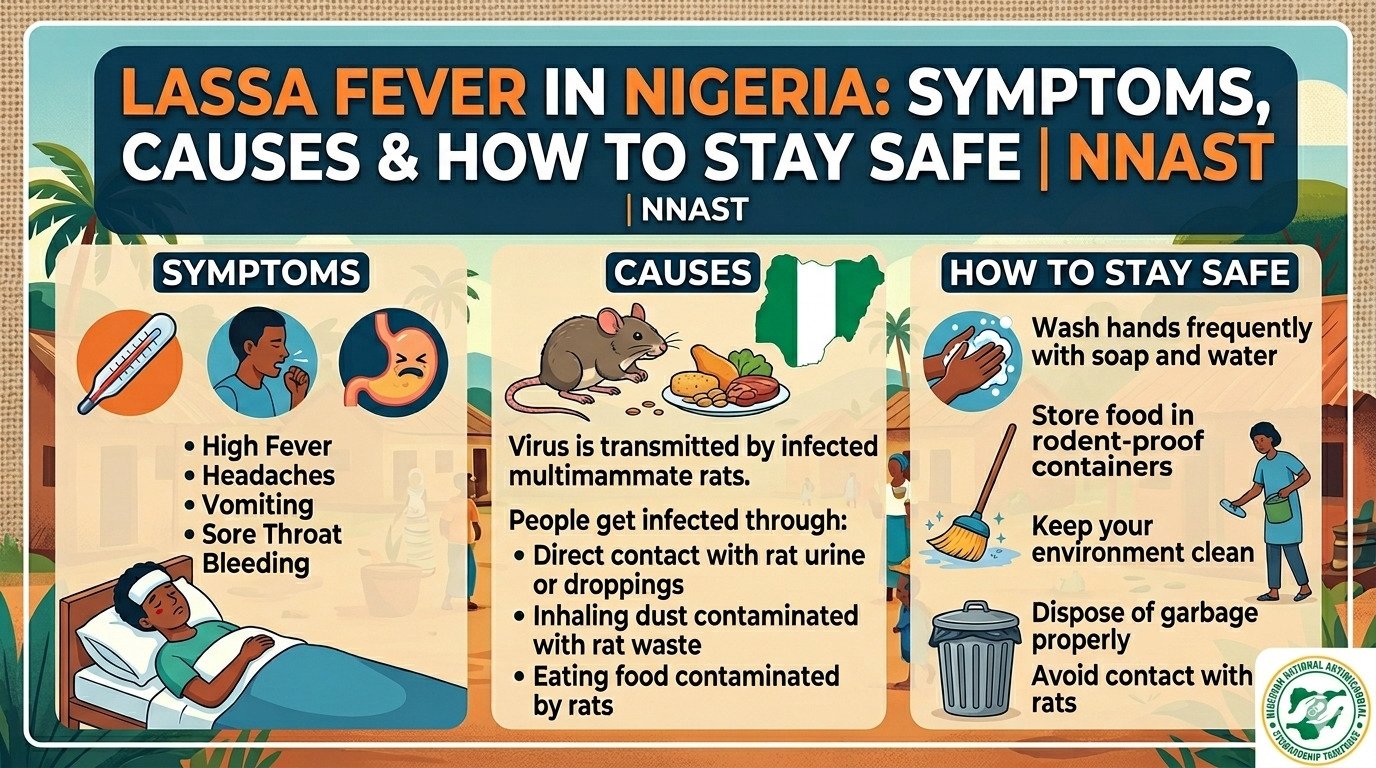
How Lassa fever spreads begins with the Mastomys natalensis rat, commonly known as the multimammate rat. This rodent is the natural reservoir of the Lassa virus and is widespread across Nigeria.
Humans contract the virus through direct contact with urine, droppings, or blood of infected rats. Eating food contaminated by rat excreta is one of the most common routes of infection in Nigerian households.
Person-to-Person Transmission
Lassa fever can spread from person to person through direct contact with blood, body fluids, or secretions of an infected individual. Healthcare workers are at particular risk if infection control measures are not strictly followed.
Airborne transmission in community settings is not well-documented. However, within healthcare facilities, droplet and contact precautions are essential to prevent nosocomial spread.
Lassa Fever Symptoms to Watch For
Early Symptoms
Lassa fever symptoms begin gradually, one to three weeks after exposure. Early signs include fever, general weakness, and malaise. Many patients also experience headache, sore throat, muscle pain, and chest pain during this initial phase.
These symptoms overlap significantly with malaria and typhoid, making clinical diagnosis extremely difficult. Laboratory confirmation through PCR testing is essential and should be sought promptly when Lassa fever is suspected.
Severe Manifestations of Lassa Fever
In approximately 20% of hospitalised patients, Lassa fever progresses to severe disease. This includes facial swelling, bleeding from the gums or nose, low blood pressure, hearing loss, and neurological complications.
The case fatality rate for severe Lassa fever is high, particularly among pregnant women in the third trimester. Spontaneous abortion occurs in the majority of infected pregnant women, making early diagnosis critical for maternal survival.
Prevention of Lassa Fever in Nigeria
Rodent Control
Prevention of Lassa fever starts with reducing contact with rats. Storing food in rodent-proof containers, disposing of garbage properly, and keeping homes clean reduce the presence of Mastomys rats in and around living spaces.
Trapping rats within the home is also recommended in high-risk areas. Importantly, rats caught in traps should not be eaten, as consuming infected rodents is a documented route of Lassa transmission.
Personal Hygiene and Healthcare Precautions
Washing hands regularly, avoiding contact with rodent droppings, and cooking food thoroughly are all effective individual-level prevention measures.
Healthcare workers must use personal protective equipment including gloves, gowns, and masks when caring for patients with suspected Lassa fever. NNAST collaborates with health authorities to improve clinical preparedness for Lassa and other haemorrhagic fevers across Nigerian health facilities.
Frequently Asked Questions
Is Lassa fever treatable?
Yes, with early antiviral treatment using ribavirin. Research shows ribavirin is most effective when administered within the first six days of illness onset. Supportive care including hydration and management of complications also significantly improves outcomes.
Which states in Nigeria have the highest Lassa fever burden?
Edo, Ondo, and Ebonyi states consistently report the highest number of confirmed Lassa fever cases in Nigeria, according to NCDC surveillance data. However, cases have been confirmed in multiple states across the country.
Can Lassa fever be confused with other diseases in Nigeria?
Yes. Lassa fever symptoms overlap significantly with malaria, typhoid, and other febrile illnesses. Without laboratory testing, accurate diagnosis is impossible. This overlap often leads to incorrect antibiotic prescriptions for what is actually a viral infection.