
The Nigerian Centre for Disease Control and Prevention serves as the country’s premier public health institution, coordinating disease surveillance, outbreak response, and health emergency preparedness across all 36 states and the Federal Capital Territory.
Established to strengthen Nigeria’s capacity to prevent, detect, and respond to infectious disease threats, the Nigerian Centre for Disease Control and Prevention has evolved into a critical pillar of the national health security architecture.
Therefore, understanding the Nigerian Centre for Disease Control and Prevention’s structure, mandate, and operations is essential for appreciating Nigeria’s public health system capacity.
Nigerian Centre for Disease Control and Prevention
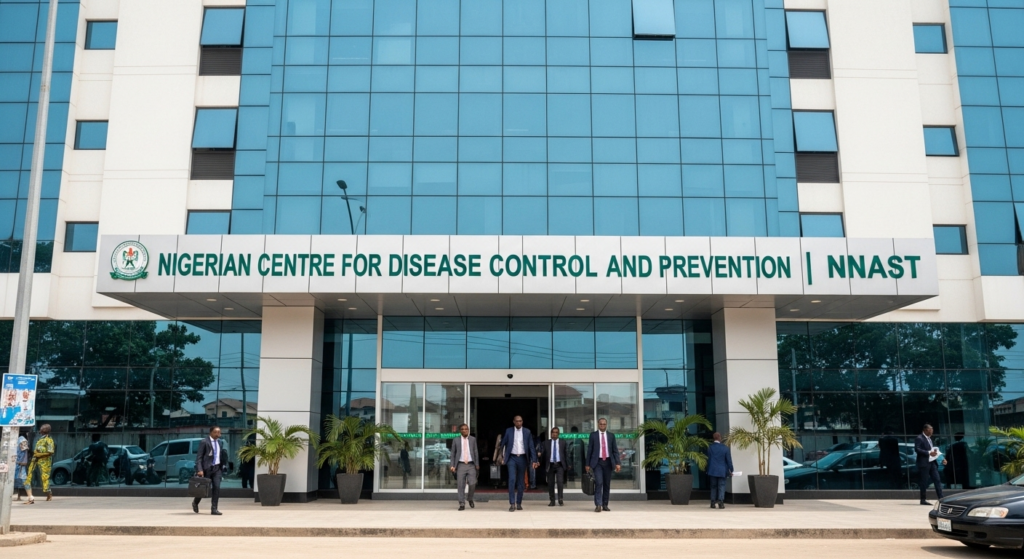
The overview of the Nigerian Centre for Disease Control and Prevention begins with its establishment in 2011, although its legislative backing was provided later by the National Centre for Disease Control Act of 2018. This legislation formalized the institution’s mandate and provided legal authority for its operations.
Historical Development
The historical development of the Nigerian Centre for Disease Control and Prevention reflects Nigeria’s evolving public health needs. Initially focused on polio eradication and surveillance, the institution gradually expanded its portfolio to address emerging infectious diseases.
Furthermore, experiences with the 2014 Ebola outbreak demonstrated the need for robust disease control infrastructure. This prompted organizational strengthening and capacity building that shaped the modern Nigerian Centre for Disease Control and Prevention.
Organizational Structure
The organizational structure of the Nigerian Centre for Disease Control and Prevention includes multiple technical departments addressing different aspects of disease control. Surveillance and epidemiology, laboratory services, preparedness and response, and infection prevention constitute core divisions.
Additionally, the Nigerian Centre for Disease Control and Prevention operates through a network of state epidemiologists and local government focal persons, who implement programs at the subnational level. This decentralized structure enables nationwide reach while maintaining central coordination.
Legal Mandate
The legal mandate of the Nigerian Centre for Disease Control and Prevention derives from the 2018 Act establishing it as a parastatal under the Federal Ministry of Health. This legislation authorizes disease surveillance, laboratory coordination, outbreak investigation, and public health emergency management.
Moreover, the Act empowers the Nigerian Centre for Disease Control and Prevention to coordinate with international health organizations, establish technical partnerships, and mobilize resources for disease control activities across Nigeria.
Role of Nigerian Centre for Disease Control and Prevention
The role of the Nigerian Centre for Disease Control and Prevention encompasses disease prevention, outbreak response, strengthening health security, and supporting the health system. As Nigeria’s primary public health institute, it serves both operational and strategic functions.
Therefore, the role of the Nigerian Centre for Disease Control and Prevention extends beyond reactive outbreak response to include proactive surveillance, capacity building, and policy development that strengthen Nigeria’s overall health security architecture.
Disease Surveillance
A primary role of the Nigerian Centre for Disease Control and Prevention is to coordinate integrated disease surveillance and response systems. This includes monitoring priority diseases, analyzing epidemiological trends, and disseminating surveillance data to stakeholders.
Additionally, the surveillance role encompasses establishing case definitions, developing reporting protocols, and maintaining surveillance databases that track disease burden across the country. Real-time data analysis enables early warning of potential outbreaks.
Outbreak Response
Another critical role of the Nigerian Centre for Disease Control and Prevention is rapid outbreak investigation and response. When disease outbreaks occur, the institution deploys rapid-response teams to affected areas to conduct case investigation, perform contact tracing, and implement containment measures.
Furthermore, outbreak response includes coordinating with state health ministries, providing technical guidance, and mobilizing necessary resources. The Nigerian Centre for Disease Control and Prevention also manages national stockpiles of medical countermeasures for emergency deployment.
Laboratory Coordination
The role of the Nigerian Centre for Disease Control and Prevention includes coordinating national laboratory networks for disease diagnosis and surveillance. This involves establishing reference laboratories, ensuring quality assurance, and building diagnostic capacity across healthcare facilities.
Similarly, laboratory coordination encompasses pathogen characterization, genomic surveillance, and maintaining biosafety standards. These activities ensure accurate disease diagnosis and enable tracking of pathogen evolution and transmission patterns.
Functions of the Nigerian Centre for Disease Control and Prevention

The functions of the Nigerian Centre for Disease Control and Prevention translate its broad role into specific operational activities. These functions span technical, administrative, and collaborative domains, collectively strengthening Nigeria’s disease control capacity.
Consequently, the functions of the Nigerian Centre for Disease Control and Prevention include both routine activities, such as disease surveillance and reporting, and emergency functions activated during health crises that require a coordinated national response.
Technical Assistance and Capacity Building
Key functions of the Nigerian Centre for Disease Control and Prevention involve providing technical assistance to state and local health authorities. This includes training healthcare workers in disease surveillance, outbreak investigation, and infection prevention and control.
Additionally, capacity-building functions include developing training curricula, conducting workshops, and establishing field epidemiology training programs to build sustainable workforce capacity for public health emergency management.
Policy Development and Guidance
Among the functions of the Nigerian Centre for Disease Control and Prevention, developing evidence-based policies and guidelines occupies central importance. The institution produces national guidelines for disease prevention, case management, and infection control.
Furthermore, policy development functions include adapting international recommendations to the Nigerian context, consulting stakeholders, and ensuring guidelines reflect current scientific evidence and operational feasibility.
Risk Communication
The functions of the Nigerian Centre for Disease Control and Prevention include communicating health risks and protective measures to the public. During outbreaks, the institution serves as the authoritative source of information, providing regular updates and addressing public concerns.
Moreover, risk communication functions involve countering misinformation, engaging communities, and tailoring messages to diverse audiences. Effective communication builds public trust and promotes adherence to recommended health measures.
Public Health Impact of the Nigerian Centre for Disease Control and Prevention

The public health impact of the Nigerian Centre for Disease Control and Prevention is evidenced by reduced disease burden, improved outbreak response times, and strengthened health system capacity. These impacts are measurable through various health indicators and outcomes.
Therefore, assessing the public health impact of the Nigerian Centre for Disease Control and Prevention requires examining both direct outcomes, such as lives saved during outbreaks, and indirect benefits, such as enhanced surveillance infrastructure that enables early disease detection.
Epidemic Control Achievements
The public health impact of the Nigerian Centre for Disease Control and Prevention includes the successful control of major epidemics. A rapid response to Lassa fever outbreaks has reduced case-fatality rates. Cholera outbreak management has prevented widespread transmission.
Additionally, the institution’s coordination during the COVID-19 pandemic enabled Nigeria to implement testing, contact tracing, and vaccination programs at unprecedented scale, demonstrating enhanced emergency response capacity.
Surveillance System Strengthening
Another public health impact of the Nigerian Centre for Disease Control and Prevention is the improvement of disease surveillance systems. More healthcare facilities now regularly report priority diseases. Surveillance data quality has improved through standardized case definitions and reporting protocols.
Furthermore, electronic surveillance platforms enable real-time data visualization and analysis, facilitating evidence-based decision-making. Enhanced surveillance allows earlier outbreak detection and more targeted interventions.
Laboratory Network Development
The public health impact of the Nigerian Centre for Disease Control and Prevention extends to laboratory capacity strengthening. More facilities can now diagnose priority diseases using standardized protocols. Quality assurance programs ensure diagnostic accuracy.
Similarly, molecular diagnostic capabilities have expanded, enabling pathogen characterization and genomic surveillance. These laboratory advances support both routine disease surveillance and outbreak investigation.
Challenges and Future Direction

Despite its achievements, the Nigerian Centre for Disease Control and Prevention continues to face challenges that constrain its effectiveness. Addressing these challenges while building on existing strengths will determine future public health security.
Therefore, understanding challenges and future direction helps stakeholders support the institution’s evolution toward greater capacity and impact. Strategic planning must balance immediate operational needs with long-term infrastructure development.
Current Challenges
Several challenges confront the Nigerian Centre for Disease Control and Prevention. Limited funding constrains program implementation and workforce retention. Surveillance gaps persist in many local government areas, particularly rural regions with weak health infrastructure.
Additionally, laboratory capacity remains insufficient for population needs. Skilled workforce shortages affect both central operations and field activities. Coordination challenges arise across multiple levels of government and health system actors.
Strategic Priorities
The future direction of the Nigerian Centre for Disease Control and Prevention includes several strategic priorities. Expanding surveillance to achieve comprehensive geographic coverage is a high priority. Strengthening laboratory networks through increased diagnostic capacity and quality assurance is essential.
Furthermore, building sustainable financing mechanisms reduces dependence on external funding. Workforce development through training programs and competitive retention strategies addresses human resource gaps.
Emerging Opportunities
The future direction of the Nigerian Centre for Disease Control and Prevention includes leveraging emerging opportunities. Digital health technologies can enhance surveillance efficiency and data quality. Genomic sequencing capabilities enable advanced pathogen tracking.
Moreover, strengthened regional and international partnerships facilitate knowledge exchange and resource sharing. Growing political commitment to health security creates an enabling environment for institutional strengthening and program expansion.
NNAST works in close affiliation with the Nigerian Centre for Disease Control and Prevention to combat antimicrobial resistance through coordinated national efforts.
FAQs
How does the Nigerian Centre for Disease Control and Prevention coordinate with state health authorities?
The Nigerian Centre for Disease Control and Prevention coordinates with state health authorities through a decentralized structure involving state epidemiologists and local government disease surveillance officers. These officials serve as liaisons, implementing national programs while reporting surveillance data and health events to the central coordination body.
What diseases fall under the surveillance mandate of the Nigerian Centre for Disease Control and Prevention?
The surveillance mandate of the Nigerian Centre for Disease Control and Prevention covers priority diseases of public health importance. These include vaccine-preventable diseases like measles and polio, endemic diseases such as Lassa fever and cholera, emerging infectious diseases, and conditions requiring global reporting under International Health Regulations.
How does the Nigerian Centre for Disease Control and Prevention contribute to Nigeria’s global health security capacity?
The Nigerian Centre for Disease Control and Prevention contributes significantly to Nigeria’s global health security capacity by building core capabilities required under the International Health Regulations. This includes strengthening disease surveillance systems, laboratory networks, emergency response mechanisms, and risk communication capacity.