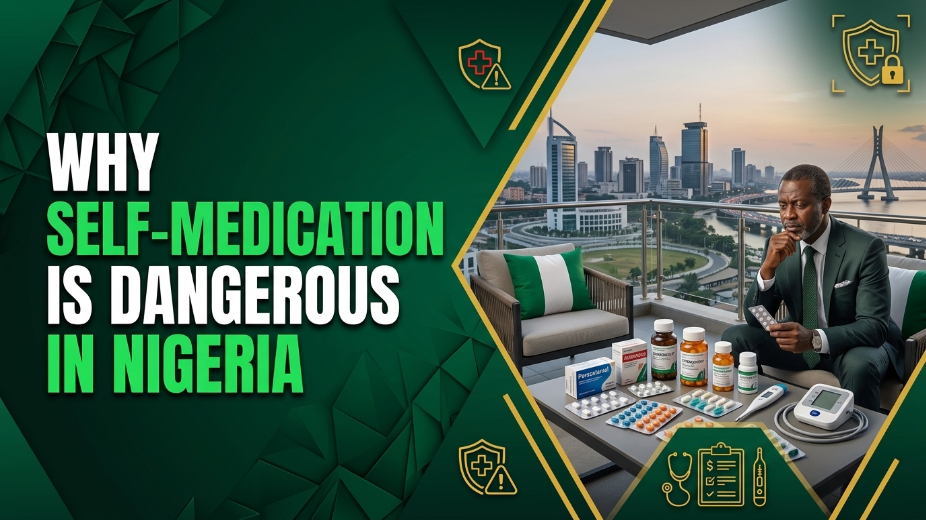
Health problems in Nigeria are numerous and complex, but self-medication is both a symptom of a struggling healthcare system and a cause of additional preventable harm. Millions of Nigerians treat themselves with prescription drugs, including antibiotics, without medical supervision. The consequences are serious, often invisible, and increasingly deadly.
What Is Self-Medication and Why Is It So Common in Nigeria?
Defining the Practice
Self-medication refers to the use of medicines to treat self-diagnosed conditions without consulting a licensed medical professional. In Nigeria, this includes purchasing antibiotics, antimalarials, and analgesics over the counter without a prescription.
The practice is widespread for several understandable reasons. Healthcare is expensive. Clinics are often far from rural communities. Waiting times at public hospitals can stretch for hours. Many Nigerians therefore turn to patent medicine stores for faster, cheaper solutions.
The Patent Medicine Store Network
Nigeria has an extensive network of patent medicine vendors (PMVs), particularly in peri-urban and rural areas. These vendors provide access to medicines in communities that would otherwise have none. However, without clinical training, they cannot safely advise on antibiotic selection, dosing, or duration.
The Hidden Dangers of Self-Medication in Nigeria
Danger 1: Antibiotic Misuse Nigeria Drives Resistance
Antibiotic misuse in Nigeria through self-medication is perhaps the most consequential hidden risk. When patients choose their own antibiotics based on past experience or neighbour recommendations, they frequently select the wrong drug, use incorrect doses, or treat viral infections with antibiotics.
Each of these errors accelerates bacterial resistance. The community-wide effect of millions of Nigerians simultaneously self-medicating with antibiotics has created the resistance crisis evident in hospitals today.
Danger 2: Delayed Diagnosis of Serious Conditions
Self-medication can mask serious conditions. A patient who takes painkillers and antibiotics for what seems like a minor infection may temporarily suppress symptoms while an underlying condition worsens.
Conditions such as meningitis, appendicitis, or cancer can be initially obscured by self-treatment. By the time the true condition is diagnosed, it may have progressed significantly.
Danger 3: Drug Abuse Nigeria Health Consequences
Drug abuse in Nigeria’s health context includes the habitual use of prescription-grade medications without clinical indication. Some Nigerians develop dependencies on sedatives, opioids, or stimulants that were initially purchased for self-treatment of insomnia, pain, or fatigue.
The intersection of self-medication and drug abuse creates a dual public health burden that strains both individual health outcomes and community wellbeing.
Danger 4: Dangerous Drug Interactions
Self-medicating patients rarely consider how different drugs interact with each other. Combining certain antibiotics with herbal remedies, antimalarials, or heart medications can cause dangerous side effects including liver toxicity, cardiac arrhythmia, or treatment failure.
Without a healthcare professional reviewing a patient’s full medication profile, these interactions go undetected until serious harm occurs.
Dangers of Self-Medication: What Research Shows
Nigeria-Specific Evidence
Nigerian academic studies consistently reveal that self-medication rates exceed 60% in many communities. Antibiotics are among the most commonly self-administered drug categories. Research also shows that self-medicating patients are significantly more likely to experience treatment failure and to present at hospital in a more critical condition than those who sought care early.
How to Address Self-Medication in Nigeria
Expand Affordable Healthcare Access
The fundamental driver of self-medication is inaccessible healthcare. Expanding primary healthcare coverage, subsidising consultations, and deploying community health workers can reduce the compulsion to self-treat.
Train Patent Medicine Vendors Better
Patent medicine vendors will likely remain part of Nigeria’s health landscape for the foreseeable future. Providing them with formal training on which medicines require prescriptions and when to refer patients to clinicians can reduce harm without eliminating access.
NNAST supports training and awareness initiatives that address self-medication as part of the broader antimicrobial stewardship agenda in Nigeria.
Frequently Asked Questions
Is all self-medication harmful?
Not all self-medication carries equal risk. Using paracetamol for mild fever or oral rehydration salts for diarrhoea is generally safe. The greatest dangers arise from self-prescribing antibiotics, prescription-only drugs, or higher-risk medicines without professional guidance.
How does self-medication contribute to antibiotic resistance?
Self-medication with antibiotics introduces subtherapeutic or inappropriate antibiotic exposure, creating conditions in which resistant bacteria thrive. It also prevents accurate tracking of antibiotic use, making surveillance and policy responses harder to target.
What should Nigerians do instead of self-medicating with antibiotics?
Consult a licensed healthcare professional before taking any antibiotic. If access to a doctor is difficult, community health workers and properly supervised telemedicine services can provide guidance on whether antibiotic treatment is genuinely necessary.