Silent Crisis Threatening Modern Medicine
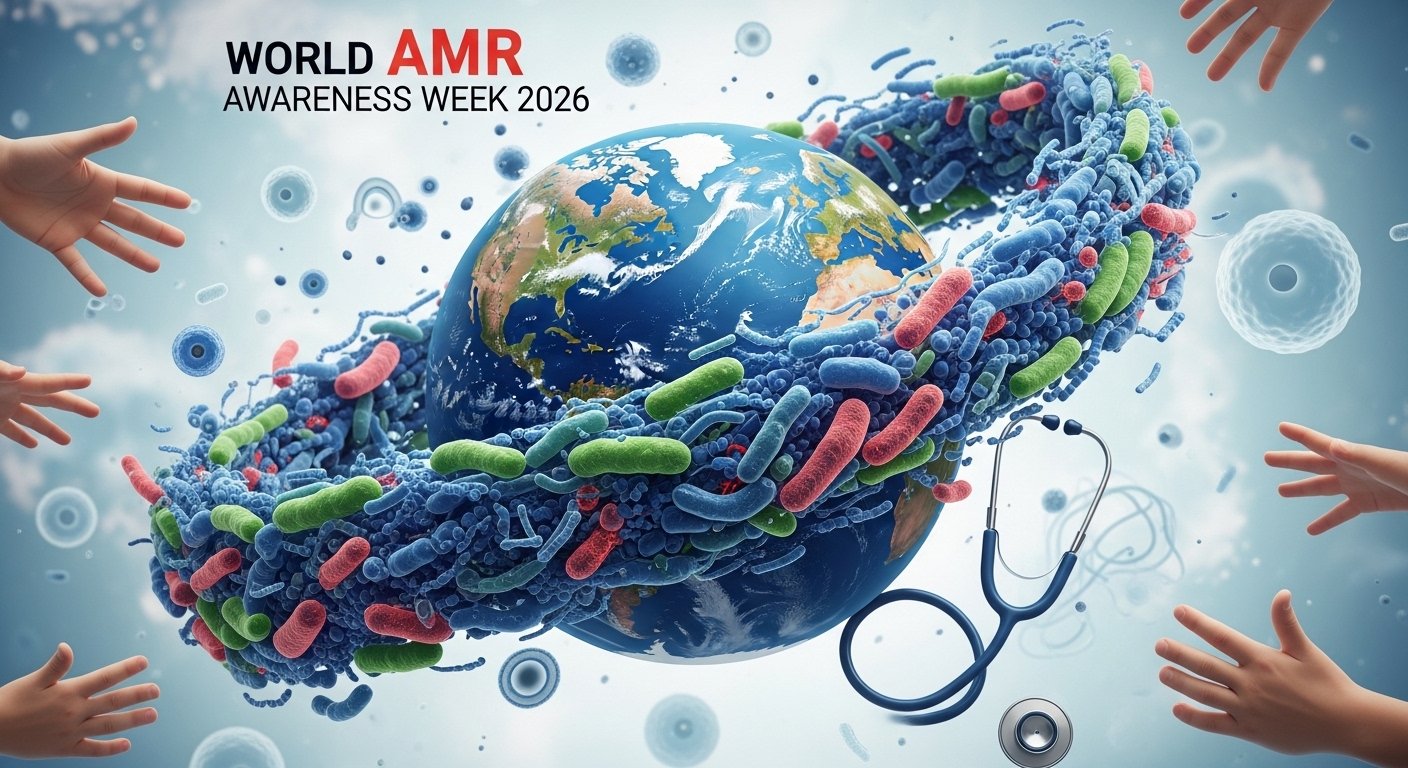
Every November, the global health community unites to confront one of humanity’s most formidable challenges. World AMR Awareness Week, observed annually from the 18th to the 24th, highlights antimicrobial resistance, a phenomenon that threatens to undermine decades of medical advancement and public health gains.
Antimicrobial resistance represents a gradual yet devastating transformation. It occurs when disease-causing microorganisms, including bacteria, viruses, fungi, and parasites, develop the ability to withstand the very medications designed to eliminate them. This biological adaptation renders once-effective treatments powerless, transforming routine infections into life-threatening conditions.
The consequences ripple across every aspect of healthcare. Common bacterial infections become increasingly difficult to manage. Surgical procedures carry heightened risks. Cancer treatments and organ transplants, which rely on effective antibiotics to prevent infections, become dangerously complicated. Without coordinated intervention, we face the prospect of returning to a pre-antibiotic era where minor injuries could prove fatal.
Why This Year’s Theme Demands Immediate Attention
The 2026 campaign carries a powerful message that resonates with particular urgency across Nigeria and the African continent. “Act Now, to Protect Our Future” emphasizes that antimicrobial resistance is not a distant theoretical threat but a current reality that demands an immediate response.
This theme acknowledges a fundamental truth. The decisions made today by healthcare providers, policymakers, farmers, patients, and communities will determine whether future generations inherit functional antibiotics or face a world where common infections become untreatable. The window for effective action continues to narrow, making every conversation, policy change, and behavioral shift critically important.
Nigeria stands at a crucial juncture in this global battle. As Africa’s most populous nation with a rapidly expanding healthcare infrastructure, the country’s approach to antimicrobial stewardship will influence regional and continental outcomes for decades to come.
The One Health Framework: Recognizing Interconnected Systems
Antimicrobial resistance does not confine itself to hospital walls or human populations. It spreads seamlessly across species, environments, and borders, making it a quintessential One Health challenge that requires coordinated responses across multiple sectors.
In agricultural settings, the overuse of antibiotics in livestock production contributes to resistant bacterial strains that can transfer to human populations through food chains or environmental contamination. In aquatic ecosystems, pharmaceutical residues and wastewater discharges create reservoirs of resistance that affect marine life and eventually return to human communities.
Environmental pollution is an often-overlooked driver of antimicrobial resistance. Improperly disposed of medications, industrial waste, and inadequate sewage treatment create conditions where bacteria can acquire and spread resistance genes. These environmental reservoirs become training grounds where microorganisms develop survival mechanisms against multiple drug classes simultaneously.
Nigeria’s diverse ecosystems, from coastal waters to agricultural regions, require comprehensive monitoring and intervention strategies that recognize these interconnections. Addressing resistance in one sector while ignoring others creates gaps that allow the problem to persist and proliferate.
Nigeria’s Strategic Response Through National Coordination
The establishment of the Nigerian National Antimicrobial Stewardship Taskforce (NNAST) in August 2024 represents a watershed moment in the country’s public health infrastructure. This national technical body operates in close partnership with the Nigeria Centre for Disease Control and Prevention, providing the coordinated leadership necessary to implement Nigeria’s National Action Plan under the One Health framework.
NNAST functions as a critical bridge connecting policy development, scientific research, clinical practice, and community engagement. Rather than creating new bureaucratic layers, it strengthens existing systems by identifying gaps, streamlining initiatives, and ensuring that antimicrobial stewardship efforts remain evidence-based and practically achievable.
The task force brings together diverse expertise from hospitals, laboratories, academic institutions, research centers, government agencies, and civil society organizations. This multisectoral composition ensures that strategies address the complex, interconnected nature of antimicrobial resistance while remaining grounded in Nigerian realities and resource constraints.
Strengthening Laboratory Capacity Across Africa
Laboratory systems form the foundation of effective antimicrobial resistance surveillance. Without accurate testing capabilities, healthcare providers cannot distinguish between susceptible and resistant infections, leading to inappropriate treatment choices that further accelerate resistance.
Recent capacity-building initiatives across Kenya and Zambia during World AMR Awareness Week 2025 demonstrated the transformative potential of targeted training programs. These online workshops covered antimicrobial susceptibility testing, laboratory accreditation processes, and electronic learning modules on antimicrobial residues, creating networks of skilled professionals capable of generating reliable surveillance data.
Nigeria has participated in similar regional collaborations, particularly through the West Africa Antimicrobial Resistance One Health grant. This initiative, supported by the UK Department of Health and Social Care, has strengthened surveillance capabilities across animal health, aquaculture, and environmental sectors in Ghana, Nigeria, Senegal, and Sierra Leone.
These investments yield multiple benefits. They improve diagnostic accuracy, inform treatment guidelines, track resistance patterns over time, and provide the evidence base necessary for targeted policy interventions. As laboratory networks expand and standardize their methods, countries can benchmark their progress and learn from regional successes.
Establishing Scientific Standards for Aquatic Pathogens
Aquaculture represents a rapidly growing sector across Nigeria and West Africa, contributing significantly to food security and economic development. However, antimicrobial use in fish farming creates unique challenges that require specialized scientific guidance.
Global initiatives have begun establishing ecological cutoff values for bacteria that affect aquatic animals, including pathogens such as Yersinia ruckeri and Vibrio parahaemolyticus. These threshold values help distinguish naturally susceptible bacterial populations from those acquiring resistance, enabling more precise monitoring and intervention strategies.
International knowledge exchange programs, such as the five-day workshop held in Singapore in July 2025, brought together participants from 11 Asian countries to improve detection methods for antimicrobial resistance in aquatic species. These collaborative learning opportunities build regional expertise and establish standardized protocols that enhance data comparability across countries.
Marine Surveillance and Environmental Monitoring
Coastal nations face particular challenges as antibiotics and resistant bacteria accumulate in marine environments through wastewater discharge, aquaculture runoff, and pharmaceutical pollution. Research conducted in Kuwait’s Gulf waters has demonstrated the value of comprehensive environmental surveillance programs.
These baseline assessments examine antibiotic resistance patterns in marine water, sediments, and wastewater outfalls. They train junior researchers in bacterial isolation and identification techniques and publish findings that inform national antibiotic use guidelines and environmental protection policies.
Nigeria’s extensive coastline and growing aquaculture industry would benefit from similar monitoring programs that track environmental reservoirs of resistance while training the next generation of researchers in specialized surveillance techniques.
Practical Steps for Every Nigerian
Addressing antimicrobial resistance requires participation across all levels of society. Individual actions, when multiplied across millions of people, create a powerful collective impact.
Healthcare seekers must resist the temptation to demand antibiotics for viral infections such as colds and flu, as these medications provide no benefit. Following prescribed dosages completely, even after symptoms improve, prevents the survival of partially resistant bacteria that could multiply and spread.
Farmers and livestock producers should implement antimicrobial stewardship principles in animal production, using antibiotics only when medically necessary under veterinary supervision. Alternative approaches to disease prevention, including improved biosecurity, vaccination programs, and optimal nutrition, reduce reliance on antimicrobial drugs.
Healthcare professionals have a particular responsibility to prescribe practices that balance immediate patient needs with long-term public health consequences. This includes using rapid diagnostic tests when available, adhering to evidence-based treatment guidelines, and educating patients on appropriate antibiotic use.
The Path Forward for Nigeria
World AMR Awareness Week 2026 arrives at a moment when Nigeria has unprecedented capacity to address antimicrobial resistance comprehensively. The infrastructure, expertise, and political commitment continue to strengthen, creating opportunities for sustained progress.
Success requires maintaining momentum beyond awareness campaigns. It requires sustained investment in surveillance systems, ongoing training for healthcare workers, robust regulatory enforcement, and continuous public education to shift cultural norms around antibiotic use.
The framework exists. The urgency is clear. The choice lies with this generation of Nigerians, who will determine whether antimicrobial resistance accelerates unchecked or whether coordinated action preserves these life-saving medications for future generations. Every stakeholder, from government ministries to individual patients, contributes to outcomes that will shape public health for decades to come.For more information about antimicrobial stewardship initiatives and resources, visit NNAST.